
The below entries are based on the date of reporting the entries on the financial statement. All information published on this website is provided in good faith and for general use only. Any action you take based on the information found on cgaa.org is strictly at your discretion. CGAA will not be liable for any losses and/or damages incurred with the CARES Act use of the information provided. Discover the difference between inventory financing and equipment financing for businesses, and learn which option suits your needs best.

What is an example of a simple cash flow hedge?
If the fair value changes of the hedged instrument are recognized in other comprehensive income, the fair value changes in the hedging instrument are cash flow hedge vs fair value hedge also recognized in other comprehensive income. Similarly, if the fair value changes of the hedged instrument are taken to profit and loss, the fair value changes in hedging instrument are also recognized in profit and loss. The accounting method reflects the mechanics of the hedge, i.e. the hedging instrument compensates the balance sheet and income statement effects of the hedged instrument. Hedge accounting enables entities to record adjustments to the fair value of a hedged item directly in the Income Statement.
Recognition and Measurement of Fair Value Hedges
- A cash flow hedge protects against changes in cash inflows and outflows, while a fair value hedge shields against changes in asset or liability values.
- To qualify for hedge accounting under IFRS, companies must meet certain criteria, including providing formal documentation and designation of hedged items and hedging instruments.
- Entities must ensure that their hedge accounting practices align with the requirements of these regulatory bodies.
- A coffee producer might engage in financial hedging to protect themselves against future increases in the price of coffee beans.
- The company would use an interest rate swap as the hedging instrument, which would change in value proportionate to the changes in the fair value of the loan, thus offsetting potential losses or gains.
The purpose of this approach is to reduce the volatility caused by recording gains and losses from both the hedged item and the hedging instrument separately. Failure to complete this documentation package before any changes in fair value occur will disqualify the relationship from receiving special hedge accounting treatment. Without the designation, the gain or loss on the derivative instrument must be recognized immediately in earnings. Establishing a valid fair value hedging relationship requires the identification and formal documentation of three distinct components at the inception of the transaction.
- Cash flow hedges, on the other hand, are used to manage exposure to variability in future cash flows.
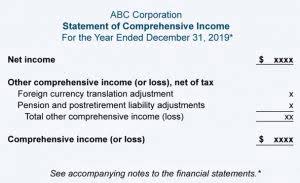
- A gain of $5,270 is recognized in other comprehensive income, and a loss of $195 ($5,270 − $5,075) is recognized in earnings in the same line of the income statement as the foreign currency exchange loss on the underlying payable.
- At the exact same time, the carrying value of the hedged item is adjusted by the amount of the offsetting loss or gain attributable to the specific risk being hedged.
- Disclosures typically include information about the nature of the risks hedged, the methods used to assess hedge effectiveness, and the extent to which the hedge has met its objectives.
- For example, Company A, a manufacturing corporation, used a futures contract to hedge against a potential decrease in the value of its raw material inventory.
- On that date, Amerco wants to hedge against an adverse change in the value of the euro over the next three months.
What are the Three Different Types of Accounting Hedge Models?
Amerco elects to measure the fair value of the firm commitment through changes in the forward rate. Because the fair value of the forward contract is also measured using changes in the forward rate, the gains and losses on the firm commitment and forward contract exactly offset. Regulatory compliance plays a vital role in risk management for financial derivatives.
Cash flow hedges, on the other hand, involve hedging a future cash flow, such as a future payment or receipt. Hedge accounting can also reduce Accounting Errors the risk factor of cash flow, investment, foreign exchange, and debt, helping businesses to gain more profit and expand across geographies. To calculate hedge effectiveness, an economic relationship must exist between the hedging instrument and the hedged item.

• At period-end, assume the bond’s fair value increases by $8,000 due to interest rate changes (i.e., rates decreased), and the derivative’s fair value decreases by $8,000. The prospective assessment ensures that the company reasonably expects the hedge to be highly effective in achieving offsetting changes in fair value, both at inception and on an ongoing basis. This expectation is often based on quantitative analysis, such as the dollar-offset method, demonstrating a high correlation between the two components. The cumulative fair value changes are taken to the ‘Cash Flow Hedge Reserve’, while the difference between the fair value changes and the reserve is taken to the profit and loss account.

Practical Example of Fair Value Hedge

Integrating these technological tools allows entities to gain deeper insights into the behavior of hedged items and the corresponding hedging instruments. This data-driven approach facilitates more accurate forecasting and more timely adjustments to the hedge, ultimately contributing to a more resilient risk management framework. Liquidity risk in the context of accounting for financial derivatives in hedge funds refers to the potential difficulty in quickly buying or selling derivatives without significantly affecting their prices. This risk is particularly pertinent for hedge funds that engage in complex and less liquid derivative instruments, which may not have a ready market. Effective liquidity risk management is crucial for hedge funds to ensure they can meet their short-term obligations and avoid forced liquidation of assets at unfavorable prices. Options are a critical component in the accounting for financial derivatives within hedge funds.